正本清源,还原真相
「八九中国民运」三十七周年纪念研讨会暨新书发布会在纽约圆满落幕
发稿时间: 二零二六年六月三日(会议闭幕特稿)发稿地点: 美国纽约
发布渠道: 全球主流新闻媒体 暨 「外高联同学研究会」官方社交媒体平台
主办机构: 外高联同学研究会(NAFUS)、中国人权(HRIC)
联合主办: 纽约大学美亚法律研究所(USALI)
【纽约讯】 在“八九中国民运”三十七周年纪念日之际,“外高联同学研究会”(NAFUS)联合“中国人权”(HRIC),在纽约大学美亚法律研究所(USALI)的联合主办支持下,于二零二六年六月二日(星期二)在纽约大学成功举办了「八九中国民运」三十七周年纪念研讨会,暨《「外高联」与八九中国民运》新书发布会和“外高联同学研究会”成立仪式。本次大会完成了“外高联”组织史的历史性重构,并就AI数字化时代下中国自由民主人权事业的未来战略达成了多项核心共识。 通过四个严密衔接的会议专场高效推进,取得了圆满成功:
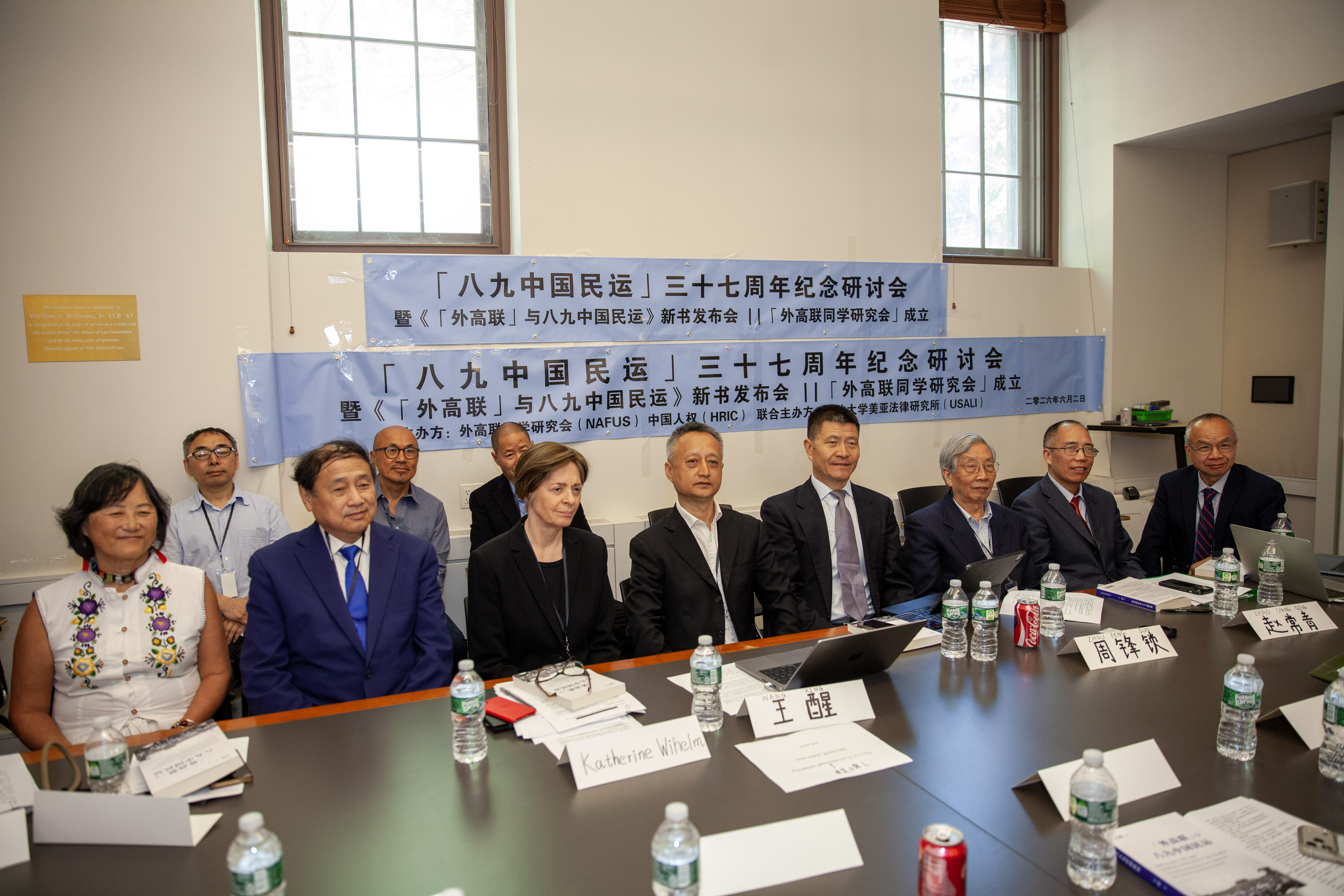
第一节:会议致辞与外高联同学研究会成立仪式
大会第一专场举行了庄严的会务启动与成立仪式。下午13:30,主持人陈小平宣布会议主题并进行了背景说明。时任「北高联」常委 / 中国人权执行主任周锋锁,以及纽约大学亚美法学研究所执行主任 Katherine Wilhelm 作为主办机构分别发表了开幕致辞,强调了抢救与保存组织历史记忆的时代价值。
在全场共同见证下,时任「外高联」执委兼纠察总队总指挥赵昕宣读了「外高联同学研究会」(NAFUS)的成立宣告,并展示了纽约州政府(Department of State)正式批准设立的非营利法人证书(DOS ID: 7928636),赋予该会法理建制与持久发展的法律地位。随后,理事会全体理事集体亮相并合影留念。
第二节:《「外高联」与八九中国民运》新书发布会
大会第二专场是由八九民运核心组织者之一王醒先生撰写的具有史学里程碑意义的纪实专著——《「外高联」与八九中国民运》的首发仪式。陈小平先生首先简述了该书对完善八九民运组织史、填补37年史实空白的里程碑意义。哥伦比亚大学政治学和中国问题著名专家黎安友(Andrew J. Nathan)教授发表了精彩的学术序言要点与致辞。时任“外高联”主席(总指挥)、天安门广场临时指挥部及保卫天安门广场指挥部副总指挥连胜德也特意为本书书写了深切寄语。“六四纪念馆” 馆长王丹同学为本次会议发来贺信,共同印证了外高联在八九民运时期的历史中流砥柱作用。
发布会上,本书作者王醒先生发表了主旨发言。王醒先生系统地阐述了新书写作的心路历程、书稿核心结构,以及打破三十七年沉默的初衷。
王醒先生在主旨发言中指出,三十七年来外界关于外高联历史与真相的记录非常罕见,导致流传着许多误读甚至别有用心的谣言。在学术建构上,他首次总结并提出了“五种八九民运叙事”作为甄别真相的坐标:中共官方叙事与中共统战叙事纯属歪曲与虚假叙事,毫无历史价值;学术叙事具备严谨研究价值;民运人士叙事具有重要历史价值,但个人视角不等同于历史全部真实;而本书重点建构的八九民运组织叙事,坚持以主要自治组织为中心,真实性最高,具有极高公信力,其作用就在于还原历史、正本清源。
王醒先生详细介绍了本书是用生命、血泪和长年坚守淬炼而成的写作过程:包括在秦城监狱中凭借记忆写在书内页并冒死带出的《八九民运大事备忘》;九十年代初在风声鹤唳中暗中联系同学进行抢救性材料收集;以及2024年在哥伦比亚大学担任访问学者期间,在黎安友教授指导下系统化熔铸成专著的历程。
同时,王醒先生在发言中公开宣讲了全书的完整内容框架(包括外高联成立运作全过程、广场临时指挥部解密、八九学运组织协同、秦城监狱铁窗实录、八九后地下持续抗争、以及留守境内历经‘五起五落’酷刑魔难的坚守),并在发言中重点针对外界误导误传外高联的“四大重大史实”进行了极其严肃的澄清:
重大史实一:天安门广场指挥部“48小时之变”真相,彻底澄清“外高联抢夺广场指挥权”的谣言。
5月22日深夜至23日凌晨,原绝食团指挥部柴玲等人返回广场,在“北高联”多数常委和外高联主要负责人未参加的情况下,召开临时会议变更领导层。该临时会议做出的决定是:由柴玲接替北高联常委郑旭光在广场临时指挥部的职责“48小时”,约定时间届满由北高联收回指挥权,“外高联”总指挥连胜德继续留任副总指挥。当时连胜德与我皆未参加该会议,事后北高联郑旭光和连胜德均对这一不符合程序和民主原则的草率变更提出强烈质疑。
48小时期限届满后,北高联于5月24日、25日多次要求按协议交回指挥权,但柴玲等人以新成立了“保卫天安门广场指挥部”为由,宣布独立,对抗并贬损北高联和外高联。所谓“外高联去抢夺控制权”完全是别有用心的谣言!事实是,外高联当时是为了配合北高联,要求保卫天安门广场指挥部履行之前约定的协议、交回指挥权,以维护整个学生自治组织的横向协同与民主原则。没能及时撤出广场的组织内部原因,实质就在于保卫天安门广场指挥部“闹独立”与个人英雄主义作祟。
重大史实二:澄清“天安门三壮士”砸污毛像事件与外高联的关联。
5月23日下午,湖南青年余志坚、喻东岳、鲁德成三人用颜料鸡蛋砸污天安门毛泽东画像。长期以来,总有人故意误导,将送交三壮士去公安局的责任扣在外高联头上。今天铁证大白于天下,我们必须严肃澄清:当天现场将三人拦下的,是北京的体育学院纠察队和“工自联”纠察队,而非外高联纠察队。对三人进行问询调查、组织同学进行表决并召开记者会的,是广场上的原绝食团一些负责人和特别纠察队,并非设在“学运之声广播站”的天安门广场临时指挥部办公驻地。外高联负责人连胜德、我本人在当年从未见过这三位青年英雄,更没有参与过任何送交他们的表决和新闻发布会。此事件与外高联毫无组织与个人关系。我们对三壮士当年的英勇行为和抗争精神深表敬佩,对他们被错误送交并遭受极权重判感到无比痛心!
重大史实三:所谓“绑架柴玲事件”的相关事实真相与澄清。
1989年6月1日中午,保卫天安门广场指挥部某负责些人召开新闻发布会,公开污蔑称是“外高联”在当天凌晨实施了“绑架”柴玲的行动。事实上,“外高联”没有人参加所谓”绑架“行动,我和连胜德是被天安门广场指挥部的秘书长郭海峰等人邀请,作为此事件的见证人,参加了这个在纪念碑上的会议,让我们去给各方评理的。历史撕开了谎言的伪装,六四之后流亡海外的当事人(如原保卫天安门广场指挥部副总指挥封从德等)已公开承认:当年所谓的“绑架”行动,实际上是绝食团发起人、原绝食指挥部副总指挥王文等人因内部矛盾所为,与外高联没有任何关系,在此予以最严厉的纠正。
重大史实四澄清所谓“外高联不想撤离”天安门广场的谣言。事实是外高联在5月26日后即主张撤离,并于6月1日发布《宣言书》并成功实施撤离了1万至2万人走向全国开展校园民主运动。而不是有些人宣称的“外高联”不同意撤离。没能及时撤离的组织内部次要因素在于保卫广场指挥部对抗北高联与外高联,而根本主因则是中共强硬拒绝学生请愿诉求并坚持使用武力。同时本书首次对全国两百多万外地抗争学子的规模与六四后遭受大面积残酷迫害的全国性牺牲进行了科学的数字估算,必须在历史上被正式记录。
在随后的亲历者见证环节中,时任「外高联」外联部秘书长赵常青从亲历者视角阐述了书中“外高联”的八九历史定性;著名理论家、《北京之春》荣誉主编胡平进行了深度学术评析;公民与人权专家 Shawn Shieh、自由社会活动家赵荔分别发表了名家评论,独立中文笔会代表杨子立对该专著的出版给予高度评价。发布会尾声举行了庄严的公益捐赠仪式,作者王醒现场正式签署协议,将本书全部全球销售管理权益和销售利润全额捐赠给研究会,用以支持八九民运历史记忆保存与人权研究、公益事业。
第三节:主要学生组织与「八九中国民运」三十七周年纪念研讨会
休整结束后,大会进入了学术分量最重的第三专场研讨会。研讨会密集推进了两大核心议题,完成了对八九民运历史真相与组织功勋的历史性重构:
议题一:八九中国民运——「外高联」十五项重大史实与贡献
本环节中,外高联王醒先生发表了重磅主题演讲,首次向世界全面、系统地宣讲并剖析了书中确立的“外高联在八九民运中的十五项重大贡献与史实”。演讲涵盖了外高联在八九学运民运期间的一系列中流砥柱作用:包括外高联及天安门广场临时指挥部的正式建制与全面运作;天津等外地500多名学生率先赴京参加最初的绝食请愿活动;在戒严初期最初四天最关键时期,外高联成功组织成千上万支学生纠察队阻截戒严军队推进,为运动争取关键时间;持续与中国红十字会进行艰难协调与谈判以争取对同学的人道主义救护并申明取消戒严;在六四屠杀后的6月4日至8日,作为主要组织对协和医院等四所医院死伤人员开展抗暴实地调查与取证; 全国外地学运民运概况与遭受迫害状况的科学估算。长期以来,外界历史叙事多局限于北京。但本书首次通过文献与走访,对全国各省市外地学运民运的规模进行了科学的概况梳理与数字估算。八九民运期间,全国各地参加、支持学运的学生与民众规模空前,外地高校参与抗争的学子高达两百多万人!而在六四镇压后,外地高校学子及地方民运参与者遭受了极其残酷且大面积的定罪、判刑与政治迫害。除了秦城监狱关押的外高联核心成员及几十位主要常委(包括首次披露的四名女生学生领袖)外,全国各省、各地方的地下拘留所与监狱里,有无数的外地战友在默默忍受着摧残。这种全国性的牺牲与迫害,必须在历史上被正式记录和确认。
出狱后于1991年,外高联主要负责人作为主要主导力量在大陆地下发起组建最早的地下组党抗争组织——「中华进步同盟」,将民主事業悲壮延续;以及在刚出狱的1991年5月底,代表外高联与北高联代表熊焱共同接受英国BBC电视台专访,向世界公开发声捍卫学运爱国定性、呼吁释放被关押的学生和民众等。
时任「北高联」常委、天安门广场临时指挥部总指挥郑旭光随后发表联讲,从北高联与外高联联合设立的天安门广场临时指挥部角度,用第一手见证横向印证并深刻重构了这段跨组织协同、生死与共的宏大历史。并对《「外高联」与八九中国民运》专著的出版和首开“组织叙事”给予高度评价。时任“首联”负责人王军涛与著名理论家胡平共同担任评议人,对外高联和天安门广场临时指挥部第的历史,以及王醒先生宣讲的十五项重大贡献,从政治学理论和中国民运历史高度进行了精辟的学术评析,一致公认外高联和天安门广场临时指挥部是八九民运中的中流砥柱。
议题二:「外高联」与「北高联」等组织在「八九中国民运」的关系、作用与意义
时任「北高联」副主席兼常委王超华系统回顾了北高联与外高联的合作,以及北京的学运相关组织、天安门广场指挥部的历程与组织化建设的得失。时任「外高联」执委兼纠察总队总指挥赵昕作核心发言,梳理了八九民运各个历史阶段主导组织的协同与博弈,并首次深入详述了五月下旬外高联与北高联紧密合作、共同成功从公安部和北京市公安局安全解救出三名“工自联”领袖(钱玉民、沈银汉、白东平)的英勇壮举,以及广场指挥部“48小时之变”等组织反思内情。中国政治转型研究所所长王天成随后对本议题进行专业评析。
第四节:圆桌对话与互动交流与会议总结
会议第四专场为圆桌对话、互动交流与全会成果归纳。知名政论学者陈破空领衔纵论,对话嘉宾赵常青、李姝云紧扣大会盒本节主题「中国怎么看?我们怎么办?」,围绕中国现状评估、凝聚力量、链接年轻世代以及AI人工智能数字化时代的民运转型策略展开了深入的研讨。
全会对本专著出版的时代意义和使命形成共识:大会宣告,必须通过还原八九民运的真实组织史,将外高联的集体历史、集体精神和集体意识重新凝聚起来,重构海内外同道之间的横向信任。会议明确了三大未来战略:
在意识形态上,坚守自由民主人权普世价值,追求“权力公有、财产私有”,推动中华文明与人类主流文明融合发展;
在传承上,把八九一代的集体记忆化为纽带,链接、感召并影响在觉醒的年轻世代,实现反抗精神的跨世代传承;
在战略策略上,运用AI人工智能等前沿科技与数字化转型策略,将自由、民主、人权的抗争战略“模型化”,推进技术民主化,为中国未来转型提供真正科学、可落地的战略方案,并培养大批具备多领域素养的“复合型组织者”。
参会人员与各界学者展开了热烈的思想碰撞。全会最后由主持人陈小平及嘉宾进行了圆满总结。正如闭幕词所宣告:“历史在这里链接过去、现在与未来。”本书的问世与外高联同学研究会的正式成立,必将成为自由民主人权事业在未来的重磅战略支点,让我们这个集体重新在历史的舞台上紧紧握手、并肩站立,迈向实现中国自由民主化的未来!
外高联同学研究会(NAFUS)
中国人权 (Human Rights in China)
二零二六年六月二日(会后统一发布)
Release Date: June 2, 2026
Location: New York, United States
On the occasion of the 37th anniversary of the 1989 Chinese Democracy Movement, the NAFUS Alumni Research Association (NAFUS), in partnership with Human Rights in China (HRIC) and co-hosted by the U.S.-Asia Law Institute (USALI) at New York University, successfully held a commemorative symposium, the launch of the new book “The Federation of Students and Scholars Abroad (FSSA) and the 1989 Chinese Democracy Movement,” and the inauguration ceremony of the NAFUS Alumni Research Association.
The conference reviewed and reconstructed the organizational history of the Federation of Students and Scholars Abroad and discussed future strategies for advancing freedom, democracy, and human rights in China in the era of AI and digital transformation.
Section I: Opening Remarks and Inauguration Ceremony The conference opened with remarks by Zhou Fengsuo and Katherine Wilhelm, who emphasized the importance of preserving historical memory. Zhao Xin announced the establishment of the NAFUS Alumni Research Association and presented the official New York State nonprofit incorporation certificate, confirming its legal status and long-term institutional foundation.
Section II: Book Launch — “The Federation of Students and Scholars Abroad and the 1989 Chinese Democracy Movement” The second session featured the launch of a major historical work authored by Wang Xing, one of the core organizers of the 1989 movement. Speakers highlighted the book’s significance in filling longstanding gaps in the historical record. Professor Andrew J. Nathan of Columbia University delivered remarks on the scholarly importance of the work. Messages of support were also received from prominent figures associated with the movement. In his keynote address, Wang Xing explained the motivation behind the book and proposed a framework of “five narratives” of the 1989 movement. He argued that official Chinese Communist Party narratives and united-front narratives distort history, while scholarly research, participant accounts, and organizational histories offer more reliable pathways toward understanding the truth. Wang also described the decades-long process of documenting events, including notes preserved from Qincheng Prison, efforts to collect historical materials during the 1990s, and the final completion of the manuscript during his fellowship at Columbia University in 2024. The book addresses major historical controversies and presents clarifications regarding: • The “48-Hour Change” in Tiananmen Square leadership and allegations that the Federation sought to seize command authority. • The relationship between the Federation and the incident involving the defacement of Mao Zedong’s portrait by the “Three Heroes of Tiananmen.” • Claims regarding the alleged “kidnapping” of Chai Ling. • Allegations that the Federation opposed withdrawal from Tiananmen Square before the June 4 crackdown. The author argued that these claims have often been misrepresented and presented documentary evidence and eyewitness testimony to support his conclusions. The session also included commentary by former participants, scholars, and public intellectuals. At its conclusion, Wang Xing signed an agreement donating all global sales-management rights and profits from the book to the association in support of historical preservation, human rights research, and public-interest initiatives.
Section III: Symposium on the 37th Anniversary of the 1989 Chinese Democracy Movement The symposium focused on two principal themes.
Theme One: Fifteen Major Historical Contributions of the Federation of Students and Scholars Abroad Wang Xing presented a detailed account of what he described as fifteen major contributions of the Federation during the 1989 movement, including: • Organizational leadership and operational coordination. • Mobilization of students from outside Beijing. • Organization of student patrol teams during the early days of martial law. • Humanitarian coordination with the Red Cross Society of China. • Documentation of casualties following the June 4 crackdown. • Nationwide assessment of participation and subsequent persecution. The presentation emphasized that participation in the movement extended far beyond Beijing and involved millions of students and citizens throughout China. The speaker argued that the suffering and sacrifices of participants nationwide should be formally recognized in the historical record.
Theme Two: The Relationship, Role, and Significance of Major Student Organizations During the 1989 Movement Former leaders and participants reviewed cooperation between the Beijing Students’ Autonomous Federation and the Federation of Students and Scholars Abroad, including the operation of the Tiananmen Square Command Headquarters. Discussions examined organizational successes, internal disagreements, and historical lessons.
Section IV: Roundtable Discussion and Conference Conclusions The final session featured a roundtable discussion on contemporary China, intergenerational engagement, coalition-building, and strategies for democratic advocacy in the age of artificial intelligence. Participants reached consensus on three broad strategic directions: • Upholding universal values of freedom, democracy, and human rights. • Preserving and transmitting the collective memory of the 1989 generation to younger generations. • Applying AI, digital technologies, and innovative organizational methods to support future democratic development. The conference concluded with a call to strengthen historical memory, rebuild trust among advocates of democracy and human rights, and develop long-term strategies for China’s democratic future. NAFUS Alumni Research Association (NAFUS) Human Rights in China (HRIC) June 2, 2026